IT STARTED ON SAWYER

Adventures in Sustainable Renovations


2 Comments

Weeks 29 & 30 – Some Down Time

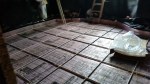
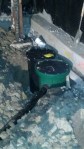
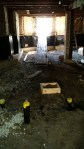
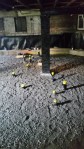
The last two weeks didn’t show any progress on our site. We mostly let the concrete cure and harden to the point where it can handle framing construction on top of it. Our carpentry contractor has stopped by to remeasure and calculate how much material will be needed and we expect to be back up and running by next week. But besides that, we figured its a good time to come through and try to do something about the weeds that have taken over the yard!


Leave a comment

Week 28 – New Water Service and Basement Slab!

To start the week, our plumbing contractor arrived with a backhoe to start the dig for the new water service into the building. As mentioned previously, this two flat had been built in 1896, which, like many old Chicago homes, means old lead pipes. Our building had 1 1/4″ lead water line serving the building and we plan on upgrading this to a 2″ copper line.

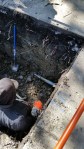
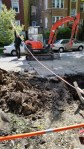
In the weeks leading up to this event, our plumbing contractor had pulled a special permit with the City of Chicago, which (1) allows him to dig up the street, and (2) notifies all relevant utility companies to come to our project site and mark all existing underground infrastructure. As shown in the first photo, the utilities place a flag marking what is beneath the ground and spray paint a line showing the approximate location and direction of said infrastructure. With the ground marked, the first order of business for our plumbing contractor was to dig a trench through the street to get down to the main city water line. At the same time, our contractor dug a smaller trench in our basement where the new water line is to come in.

With both trenches dug out, our plumber placed a hydraulic powered tool in the basement trench and aligned it pointing straight towards the trench in the street. Once everything was aligned, the tool dug underground for a good 30 or so feet, beneath our stairwell, the front walkway and the public sidewalk, to end up square in the middle of the trench by the street. Once he removed the tool, he unrolled the long copper pipe and tied it to the end of the hose, which had provided the hydraulic pressure to the tool, and pulled the copper pipe straight through the opening. On the street side, our plumber connected the pipe to the main city water pipe; on the house side, our plumber will route all water service piping from this entry point.

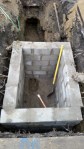
For the final step, our plumber built a underground vault out of cinder blocks, which will house our smart water meter. Without a water meter, Chicago uses a formula, based on factors such as building width, number of bathrooms, etc, to calculate water usage. This formula tries to capture how much water you can use, therefore in most instance you are paying much more than you would with the water meter. The meter will also give you good data in case you are trying to conserve water, you could compare your actual usage versus buildings of a similar size.

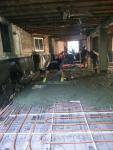
With the underground plumbing, radiant system and new water service complete, we were finally ready for a basement concrete slab! Our intention is to have a polished concrete floor as our end product, therefore our concrete contractor recommend that we make sure the concrete floor is as smooth as possible prior to the final grinding (to happen much later in our construction process). Therefore, we made sure to (1) get a 5 bag mix, meaning its a little more liquid, getting us a better chance to make sure the floor is level; (2) have a chemical free concrete mix, because you don’t want any oily streaks on the exposed floor, and (3) made sure that our contractor smoothed the concrete as much as possible during the pour, to avoid uneven / bumpy areas which would prevent us from properly grinding / polishing the concrete later on. With the concrete poured, it will take a few days for it cure and be strong enough to start building out the framing. The concrete will continue to cure for up to 3-4 weeks. Hopefully everything went well and all this effort has minimized any big cracks in the concrete!


Leave a comment

Week 27 – Radiant System Going In!

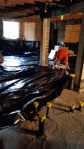
Picking up from where we left off the previous week, with the basement ground fairly leveled out our contractors began by laying a basic plastic water proof membrane on the basement floor. This membrane is another step in trying to control the ground moisture from creeping up through the porous concrete. The continuous membrane is run along the basement soil, over the footings, and partially up the perimeter walls. The intent of this is for moisture to collect on the underside of the membrane and drain back into the soil. The perimeter walls and any woodwork used to cover the footings will be built on top of this membrane to prevent the wood from rotting.

With the membrane in place, our HVAC crew arrived on site and began to lay 2-inch insulation on the ground. The insulation was placed to cover the entire basement floor and it was raised on the sides to insulate the slab from the perimeter footings. For both energy efficiency, occupant comfort as well as slab moisture control, we intend to install a radiant heating system into our basement slab. This insulation layer will, most importantly, make sure that we are heating our slab and not the ground. In colder climates, the ground can act as an infinite heat sink, which could lead to a lot of wasted energy and very high energy bills!

The next most important thing in a radiant heating system after the insulation is to try to push the radiant tubing towards the middle / upper half of the concrete slab (without being so close to the top that you actually see the tubing). We have estimated that the concrete slab to come in around 4-5 inches thick, therefore the sweet spot for our tubing is 2-3 inches above the top of the insulation. There are a few products on the market that allow you to do this fairly seamlessly, but as our construction budget is eroding, our HVAC guy opted to build his own that is a little more cost effective. Our contractor built a lattice structure out of PVC tubing and laid it on top of the insulation. Next he laid out the PEX radiant tubing and tied it down on to the PVC lattice.  The ends of the radiant tubing loops were brought together and terminated at a temporary structure which will be the location of our in-wall radiant manifold. The manifold will eventually be supported by the wall 2x4s, but we need to make sure the tubing doesn’t move during the concrete pour (and doesn’t get buried by the concrete). We tried to place the manifold location as close to our mechanical closet to reduce the distance between the water heater and the manifold.

There were a few key items on the installation of the radiant tubing system that we made sure our contractor paid attention to. (1) The tubing was laid out with fairly uniform spacing and it was run to every corner of the basement floor. You want to be sure that the end result provides even heat throughout the basement and you don’t end up with hot and cold spots. (2) If you are using wax seals around your toilet fixtures, then you should keep a 8″ to 12″ distance from the seal to the tubing. This would prevent melting the wax seal, avoiding future leaks. (3) Place a protective sleeve on the radiant tubing at the point where the tubing penetrates the concrete into the manifold. The sleeve protects the tubing from shear forces put on the tubing which could cause the tubing to break.

With this system laid, we are waiting on our new water service to be installed and then its on to the concrete slab!


Leave a comment

Week 26 – Digging In (with underground plumbing)!

To start the week off, we had our construction crew come through and remove up to 6 inches of soil from our basement to make the basement floor level and to make sure we have adequate ceiling height. Ceiling height in a basement must be a minimum of 7’6″ per the City Code to be considered a legal living space, but anything under 8″ starts to feel cramped. We asked our contractors to dig out enough dirt to account for the future insulation, concrete slab, and ceiling drywall and leave us with a minimum of 8 feet ceiling heights.

With the dirt removed, our plumbing contractor showed up on site to install the underground plumbing. The contractor first dug  out two deep holes in the south corner of the basement and installed the catch basin, where at a later date we’ll install the sump pump, for the drain tile system (see week 22). The second hole, the plumber placed the basin for the sewage ejector system. To prevent any back-flow issues from the city sewer system during a downpour, we are building an overhead sewer system with an ejector pump.  The overhead sewer will place our piping system several feet above street level, which will make highly unlikely that the system will ever back-flow into our basement. Chicago has had flooding issues in the past and with this construction method, any city sewer issues will overflow into the city streets long before it would flow into our basement.

The catch basins are the low point of our plumbing system. The cast iron piping is connected to these basin’s and is installed with a slight slope so that everything will flow properly in the system. Once the plumbing contractor installed the catch basins, they trenched the ground to lay the cast iron pipe. As they installed the system, the piping was stubbed high enough so that it will rise above the future concrete floor. This is easy enough for plumbing that will run vertically in a wall, but it can be difficult to install the basement floor drains at the exactly correct height.

Finally, once the underground plumbing was installed, the city inspector came by to review the installation and he gave his approval. The first of several city inspections has been passed! With the city approval received, the plumber covered the piping back up with soil. We then had our work crew come back out and use a plate compactor to smooth and level the basement dirt in preparation for our mechanical contractor!


Leave a comment

Weeks 23, 24, and 25 – A Problem Works out for the Better

In our last post, we discussed the rubble foundation and the need for new footings. After the new footings were built, we were walking around the basement with drawings in hand and we realized that our architect never accounted for the correct dimensions of the exterior walls. We knew that our basement layout called for a “cozy” guest bedroom, but the real dimensions didn’t leave enough room to fit a full size bed. We quickly realized that we have to completely redo our basement layout and find something that works and we had to do this quick as our underground plumbing was scheduled to begin soon!

We spent the next two to three nights after work sketching out new layouts, trying to find the optimal use of space. What we ended up with, in our opinion, was a significantly better basement layout then we originally had. Our new layout cut down on wasted space and better incorporated public living space into the natural flow of the basement. This exercise moved us from a layout we were content with to a layout we are very happy with.

Once we finalized the new layout, we came back to our project and we taped out the full layout on the ground. Due to the timing between when we found the layout issue and when our plumber was scheduled to start work, there was not enough time to get our architect to complete official drawings. Though we created very accurate to scale sketches of our new layout, the underground plumbing must come up from the ground with only an inch or two of tolerance. We felt that taping out the layout, showing the contractors exactly where every wall will be, will go a long way to minimizing future errors in construction. Even with accurate drawings, we would strongly recommend to anyone working on a project of their own to go through a similar exercise. It proved to be a great way to visualize the future space and it provides a better guide to your contractors and can minimize mistakes.