Another week, another challenge. Once we finished demo on the basement, we learned that our building was built using a rubble foundation. After 100 years of season changes, moisture, and ground movement the foundation has many cracks and fissures. The best option to stabilize and reinforce the building is to build new footings along the entire perimeter of basement.
Our crew dug a trench down along the existing foundation, about 12 inches wide and 24 – 30 inches down. They then set up the formwork and poured the concrete footings, ending about 12 inches above the original basement floor (to ensure that we tie into the existing foundation).
Once the footings were in place, we trenched the perimeter along the new footings in order to install the drain tiles. (This is one of several lines of defense that we are planning on to address water and moisture issues that can be very common in basements.) Water naturally creeps horizontally in dirt and will be drawn towards the concrete footings. Concrete, being porous, will soak up this moisture and cause the basement to be humid and damp, something we are working hard to avoid (we’ll have bedrooms down here!). The drain tile system consists of a perforated pipe that is run along the perimeter of the foundation and this pipe is sloped towards the center of the south wall of our building. At this location we will install our sump pump which will pump away all of this collected moisture.
-
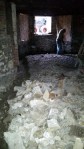
- Trenching the perimeter
-
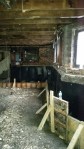
- Prepping the form work
-
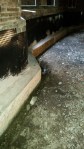
- Our new concrete footings!
-
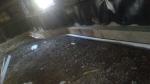
- Drain tile being installed along the perimeter
-
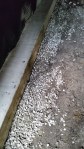
- Drain tile is backfilled with gravel




 IT STARTED ON SAWYER